Limited-time offer on the official DentaSonic store — check today's price →

Ultrasonic retainer care

A Fresher Retainer in 3 Minutes — No Brush Required

DentaSonic uses high-frequency sound waves in plain water to lift film, odor and buildup from places a toothbrush simply can't reach.

  • 47kHz ultrasonic action reaches grooves, wires and edges
  • Three cycle lengths: 3, 5 or 10 minutes
  • Works with water alone — tablets are optional
  • Cordless, USB-rechargeable and light enough to travel
  • Fits retainers, aligners, night guards, dentures and jewelry
Check Availability & Price

Shipping from the official store

๐Ÿšš Fast shipping ๐Ÿ”’ Secure checkout โ†ฉ๏ธ Satisfaction guarantee

Built for everyday routines

Let Sound Waves Do the Scrubbing

Drop your appliance in while you brush your own teeth. By the time you rinse, the cycle is done.

ใ€ฐ๏ธ

47kHz pulse

Millions of tiny bubbles form and collapse against every surface.

โฑ๏ธ

3 ยท 5 ยท 10 minutes

A quick daily refresh or a longer deep clean when it's been a while.

๐Ÿฅฃ

180ml steel tank

Room for a full-arch retainer or denture, easy to rinse and dry.

๐Ÿ”‹

Up to 150 minutes

Roughly 50 quick cycles from a single USB charge.

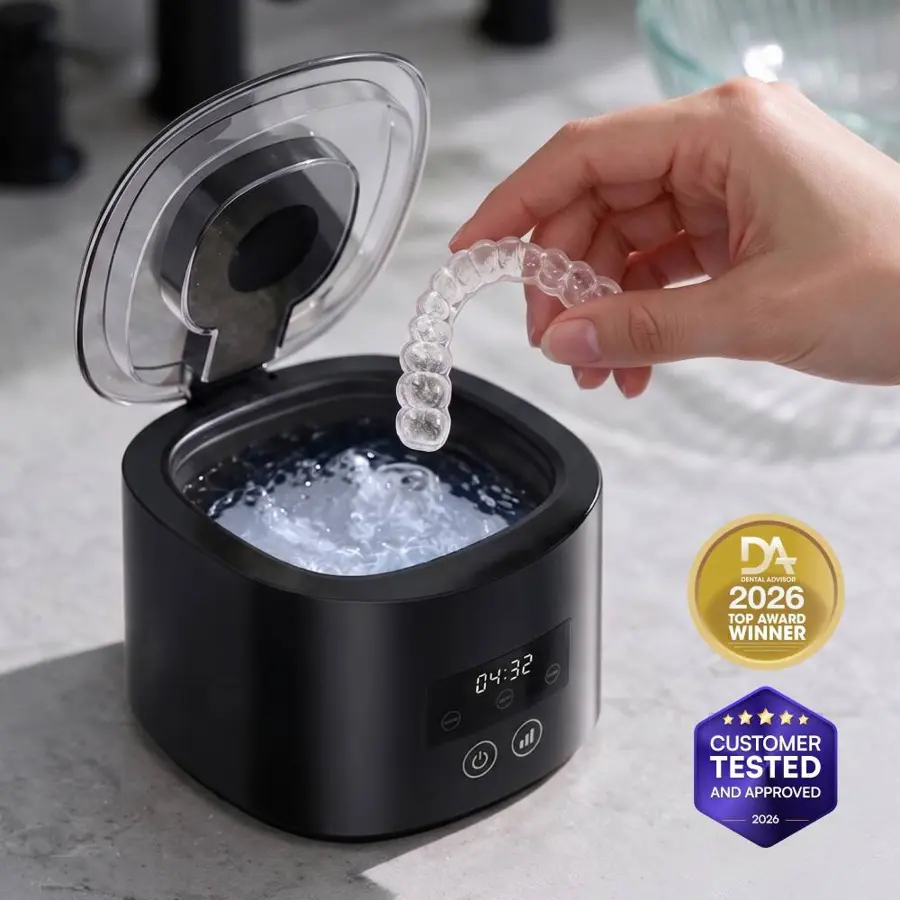
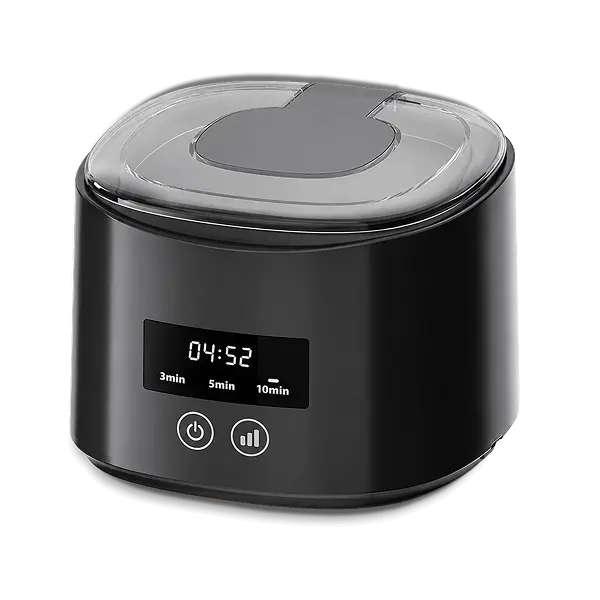
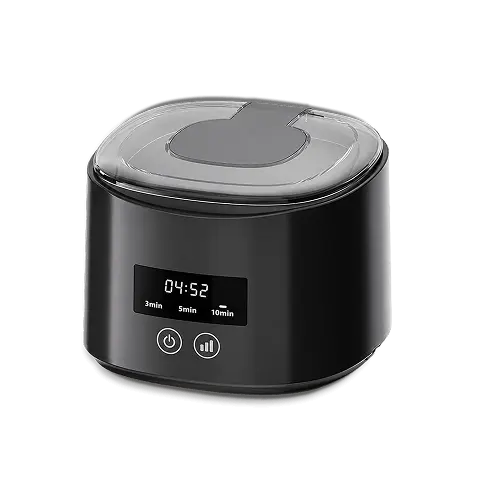
DentaSonic cleaner with digital timer display
๐Ÿ”˜

One-button control

Press once to start, press again to change the cycle. That's it.

๐Ÿ”Œ

Cordless & rechargeable

No outlet hunting on the bathroom counter or in a hotel room.

๐Ÿฆท

Multi-appliance

Retainers, clear aligners, mouthguards, dentures, rings and more.

๐Ÿงณ

Compact build

Small enough for a toiletry bag, sturdy enough for daily use.

Why brushing falls short

Bristles Only Clean What They Touch

A retainer is full of tiny ridges shaped to your teeth, plus wires and edges that hug your gums. A toothbrush skims across the high points and leaves the valleys behind — exactly where cloudy film and odor-causing bacteria like to settle.

Ultrasonic cleaning works differently. The tank vibrates the water tens of thousands of times per second, creating microscopic bubbles that implode against every surface they meet. That process, called cavitation, reaches anywhere water can reach.

A habit you'll keep

Easy Enough to Do Every Single Day

The best cleaning routine is the one you don't skip. DentaSonic turns retainer care into a single button press: fill, drop in, start. No overnight soaks, no fizzing tablets to buy, no toothpaste scratches on clear plastic.

  • 3-minute Quick Clean — your everyday morning or bedtime refresh.
  • 5-minute Enhanced Clean — for visible film or a stale smell.
  • 10-minute Deep Clean — after a weekend forgotten in the case.
See Today's Offer

Goes where you go

One Charge Covers a Two-Week Trip

With up to 150 minutes of cordless runtime, two weeks of daily quick cycles uses well under a third of a single charge. The unit is light, the lid closes snugly, and it charges from the same USB brick as your phone.

Business trip, summer camp, or a long weekend away — your retainer stays on the same routine it has at home.

How it works

Clean Your Appliance in 3 Simple Steps

1

Add water

Fill the stainless steel tank with clean, room-temperature water.

2

Place it inside

Set your retainer, aligner, mouthguard or denture in the tank and close the lid.

3

Choose your cycle

Press the button for 3, 5 or 10 minutes. Rinse, dry, and wear.

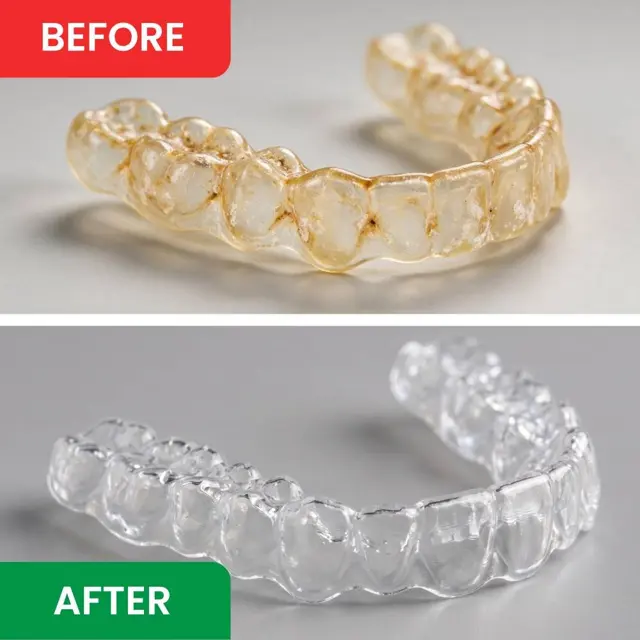
A yellowed retainer before cleaning and the same retainer clear after cleaning
Cloudy film and discoloration build up over time — regular ultrasonic cycles help keep clear plastic clear.
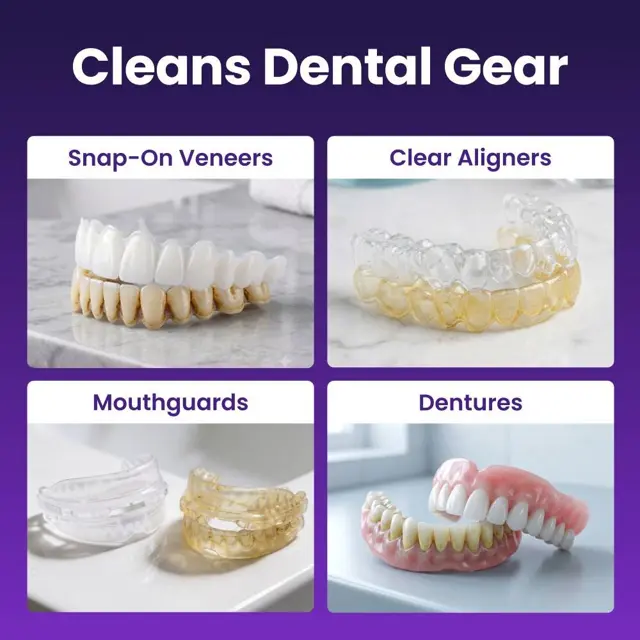
Snap-on veneers, clear aligners, mouthguards and dentures
One device for the whole household's dental gear, from snap-on veneers to full dentures.

The care guide

Why Your Retainer Deserves More Than a Quick Rinse

If you wear a retainer, clear aligners or a night guard, you put a piece of plastic in your mouth for hours every day. While it's in, it sits in a warm, moist environment bathed in saliva, food particles and the same bacteria that form plaque on your teeth. Take it out, and that thin layer comes with it. Left alone, it hardens into a cloudy coating, starts to smell, and can even irritate your gums.

What actually builds up on a retainer?

The film on a dirty retainer is mostly biofilm — a sticky community of bacteria held together by proteins from your saliva. Over days, minerals from saliva can calcify that film into a chalky white crust similar to tartar. Coffee, tea and red wine add stains on top. None of this is dangerous overnight, but over weeks it can make an appliance look yellow, feel rough against your tongue, and carry a smell that a rinse never quite fixes.

The problem with the usual methods

Rinsing under the tap removes loose debris but not biofilm, which clings to the surface. Brushing helps, but bristles can't follow every contour of a custom-molded appliance, and abrasive toothpaste leaves micro-scratches that make clear plastic look foggy and give bacteria new places to hide. Soaking tablets work for some people, yet they require a recurring purchase, long soak times, and leave a taste behind that many wearers dislike. Hot water is the one approach to avoid entirely — heat can warp thermoplastic and ruin the fit.

How ultrasonic cleaning is different

Ultrasonic cleaners have been used for decades in dental offices and jewelry shops. A small transducer under the tank vibrates at a frequency far above human hearing. Those vibrations create pressure waves that form and collapse microscopic bubbles throughout the water. Each implosion releases a tiny jolt of energy right at the surface of whatever is submerged, loosening debris from crevices without abrasion. Because the action happens in the water itself, it reaches the inside of wire loops, the deep grooves of an aligner tray and the underside of a denture equally.

DentaSonic brings that same principle to a countertop-sized unit at 47kHz, a frequency chosen to deliver vigorous cleaning while staying gentle on plastics and metal. Since it relies on mechanics rather than chemicals, plain water is all you need for a daily clean.
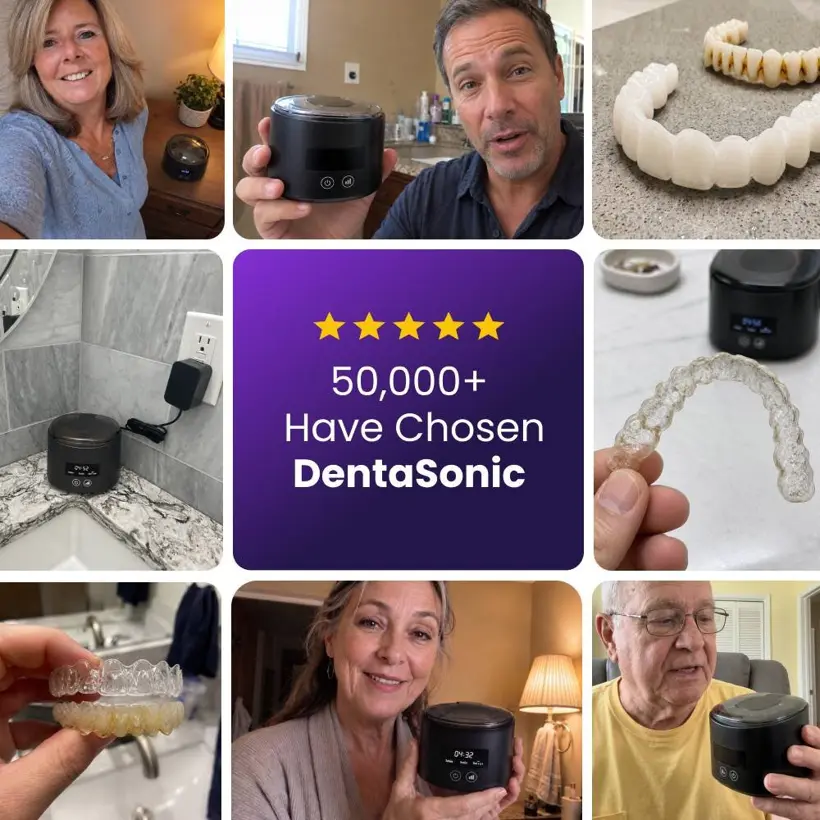
Collage of people using DentaSonic with retainers, aligners and dentures

A simple daily routine that works

  1. Rinse first. After removing your appliance, rinse it in cool water to clear saliva before it dries.
  2. Run a quick cycle. Place it in the tank with fresh water and run the 3-minute setting while you brush your teeth.
  3. Rinse and air dry. Give it one more rinse, then let it dry before returning it to its case — moisture trapped in a closed case invites odor.
  4. Clean the case, too. Wash the storage case with mild soap a few times a week so you aren't reintroducing bacteria.
  5. Go deeper weekly. Once a week, or after a few busy days, use the 10-minute cycle for a more thorough refresh.

Tips to extend the life of your appliance

  • Avoid hot water, dishwashers and harsh household cleaners like bleach.
  • Don't eat or drink anything other than water while wearing clear aligners.
  • Change the water in the tank after every cycle.
  • Keep your appliance in its case — not a napkin — when it's out of your mouth.
  • Follow your orthodontist's or dentist's advice for your specific appliance.

Is it worth it?

For anyone who wears an appliance daily, a dedicated ultrasonic cleaner removes the friction from good hygiene. It replaces a recurring tablet habit, protects clear plastic from scratches, and makes it realistic to clean properly every day instead of "when you remember." For families with several retainers, mouthguards or a set of dentures in the house, one small device covers everyone.

This guide is for general information and is not a substitute for advice from your dentist or orthodontist.

Get DentaSonic Today
Side by side

DentaSonic vs. Typical Cleaning Methods

DentaSonic cleaner
DentaSonicBrushingSoak tablets
Reaches grooves & wiresโœ“โœ•โœ“
No scratchingโœ“โœ•โœ“
Done in 3 minutesโœ“โœ“โœ•
No recurring purchaseโœ“โœ“โœ•
No chemical aftertasteโœ“โœ•โœ•
Multiple cycle lengthsโœ“โœ•โœ•
Cleans jewelry tooโœ“โœ•โœ•

Questions

Frequently Asked Questions

Do I need any special cleaning solution?

No. Plain water is enough for daily cleaning because the ultrasonic action does the mechanical work. If you prefer, you can add a small amount of a cleaner made for dental appliances.

Is ultrasonic cleaning safe for clear aligners?

Yes. Ultrasonic cleaning is non-abrasive and doesn't involve heat, so it won't scratch or warp thermoplastic trays when used with room-temperature water.

What can I put in it besides a retainer?

Clear aligners, night guards, sports mouthguards, snap-on veneers, partial or full dentures, and everyday jewelry such as rings and chains. Avoid soft or porous gemstones and anything glued together.

How long does a charge last?

Up to around 150 minutes of runtime, which works out to about 50 quick 3-minute cycles. It recharges over USB.

Which cycle should I use?

Use the 3-minute cycle for everyday care, 5 minutes when you notice a film or smell, and 10 minutes for a periodic deep clean.

Where can I buy it?

Use any of the buttons on this page to visit the official ordering page, where you'll find current pricing, bundles and shipping details.

Ready for a Retainer That Feels Truly Clean?

Swap scrubbing and soaking for a three-minute routine you'll actually stick to.

Get DentaSonic →